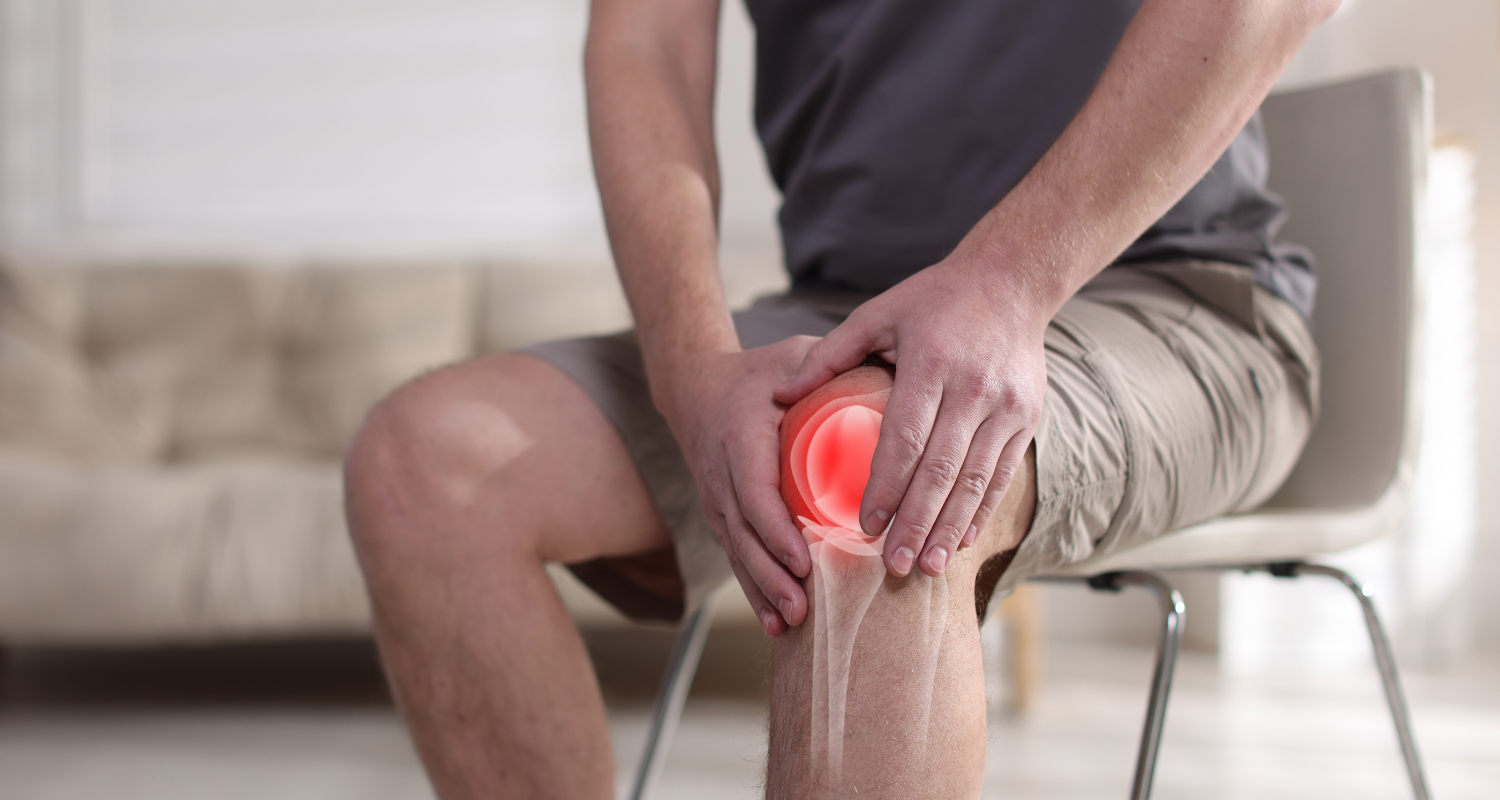
Autoimmune arthritis feels like an injury, the flu, and complete exhaustion arriving at once, and not lifting. These are the words we reach for when we need someone to understand, and they are yours to use.
Reviewed by Leila Valete, Health Education Manager, AiArthritis
What is on this page
- The three comparisons, at a glance
- What does autoimmune arthritis feel like day to day?
- Why does autoimmune arthritis feel like having the flu?
- Why are you still exhausted after a full night's sleep?
- Why do people say you don't look sick?
- What is the difference between autoimmune and autoinflammatory arthritis diseases?
- What your experience does here
- Frequently asked questions
Autoimmune arthritis feels like three things at once: the deep ache of a fresh injury, the whole-body sickness of the flu, and exhaustion that sleep does not fix. What separates it from any of those is that these are chronic diseases ( National Academies). Most inflammatory forms of arthritis carry systemic effects beyond the joints, and rheumatoid arthritis may cause problems in areas such as the heart, lungs, blood, nerves, eyes, and skin ( NIAMS). Symptoms arrive and recede without warning, which is what makes them hard to describe to someone who has not lived them.
AiArthritis is led by people living with autoimmune and autoinflammatory arthritis (AiArthritis) diseases, so we have felt what you are describing, including having to explain it again and again to people who cannot see it.
Key takeaways
- Most inflammatory forms of arthritis carry systemic effects beyond the joints (National Academies), and rheumatoid arthritis may cause problems in areas such as the heart, lungs, blood, nerves, eyes, and skin (NIAMS).
- The pain resembles an injury, the sickness resembles the flu, and the exhaustion resembles the end of a punishing physical day, except that all three can arrive together and return indefinitely.
- Fatigue in rheumatoid arthritis is not ordinary tiredness, and about one in six people with rheumatoid arthritis report fatigue severe enough that it disrupts daily life more than any other symptom, including pain (Arthritis Foundation).
- Looking well is not evidence of being well, and how someone looks is not a measure of disease activity.
- Symptoms that come and go get misread as ordinary aging, overwork, or injury, and in a study across 10 European countries the median wait from first symptom to rheumatologist assessment was 24 weeks for people with rheumatoid arthritis (Saraiva and Duarte, 2023).
The three comparisons, at a glance
Each comparison gets someone most of the way there. The second half is what you add when they say they understand and you can tell they do not.
| What to compare it to | Where the comparison runs out |
|---|---|
| The morning after a bad fall. Everything has stiffened and moving is a negotiation. | There was no fall, and there is no morning when it has healed. |
| The worst day of the flu. Aching head to toe, feverish, no appetite. | There is no recovery week. It can return monthly, weekly, or for some of us daily. |
| The emptiness after heavy physical work. Nothing left in the tank. | It arrives without the work, including at rest and on waking from a full night's sleep. |
What does autoimmune arthritis feel like day to day?

Most days feel like recovering from an injury that never happened. The pain sits where a sprain or a break would sit, in joints that did nothing to earn it.
Inflammation can run intense enough that a brace, a cane, or help with ordinary tasks stops being optional, the same equipment you would use after an accident. From the outside there may be nothing to see beyond a slight limp. Most inflammatory forms of arthritis also carry systemic effects beyond the joints ( National Academies):
- Skin rashes
- Eye inflammation
- Hair loss
- Dry mouth
In rheumatoid arthritis, worsening inflammation during a flare means more joint pain and swelling, and the potential for new joint damage ( National Academies).
Why does autoimmune arthritis feel like having the flu?
The immune system is doing infection-fighting work on the wrong target. In autoimmune diseases, autoantibodies target the body's own healthy tissues by mistake, signaling the body to attack them ( NIAMS).
That process produces what an infection produces. Rheumatoid arthritis may cause fatigue, occasional fevers and a loss of appetite ( NIAMS), and because it is systemic it can also bring:
- Fever
- Weight loss
- Marked fatigue
- Muscle atrophy ( National Academies)
The aching is not confined to joints. It is everywhere, the way flu aching is everywhere. What differs is the ending. Flu has one. Symptoms worsen in flares, sometimes set off by stress, environmental factors such as cigarette smoke or viral infections, too much activity, or suddenly stopping medications ( NIAMS), and they can return monthly, weekly, or for some of us daily.
Why are you still exhausted after a full night's sleep?
Because this is not ordinary tiredness. Fatigue in rheumatoid arthritis is different from normal tiredness, and it is described as overwhelming and uncontrollable ( InformedHealth.org).
It is not the pleasant heaviness after a long hike. People in this community tell us it arrives on days with no exertion at all, including at rest and first thing in the morning. It is worth naming to your rheumatologist as its own symptom rather than folding it into the pain, because people here say it gets left out of the appointment.
Arthritis Foundation
If tiredness is the symptom you would name as your worst, that number is why.
Why do people say you don't look sick?
Because the inflammation happens inside joints and organs, where nobody can see it. You can look well on one of your hardest days.
Early symptoms come and go, and people commonly misread them as a natural consequence of age, of physical effort, or of some kind of injury ( Saraiva and Duarte, 2023). Those misreadings cost time.
Saraiva and Duarte, 2023
A disease that hides, fluctuates, and resembles ordinary life is hard to catch early, and the routes into diagnosis were not built for symptoms that behave this way. Describing what you are experiencing precisely, and early, is one of the few levers any of us holds. If you are still looking for an answer, our patient journey resources are peer-led, built by people who went through this same stage, and they start exactly there.
What is the difference between autoimmune and autoinflammatory arthritis diseases?
Both cause inflammation in healthy tissue. They differ in which half of the immune system misfires ( MedlinePlus).
| Autoimmune | Autoinflammatory | |
|---|---|---|
| Which system misfires | Adaptive immunity, the protection you gain as your body learns over time which substances are harmful | Innate immunity, the protection you were born with and the body's first line against invaders |
| How it shows up | Autoantibodies target the body's own healthy tissues by mistake | Recurrent unexplained fever, skin rash, joint or muscle pain, fatigue, coming and going |
This is why our name holds both words. More than 20 AiArthritis diseases sit under it, overlapping in some symptoms and diverging sharply in others. Our disease pages set out which is which, written with patients living each one.
What your experience does here
Our work is peer-led. Every comparison on this page started as something one of us said, reached for again and again until it was clear it worked better than any symptom list.
Decisions about these diseases get made every day by people who do not live them. That is backwards. What a disease feels like from the inside is knowledge only we hold, and it has not yet been part of what gets built.
That is what happens to what you tell us:
- We listen. Patients talking to patients.
- We use what we hear to find what is still missing from the conversation.
- We come back to this community to build what closes that gap.
- Then it goes back out the way it came in, patient to patient, so the person three steps behind you has your words instead of starting cold.
When it works, the next person walks into the appointment with your words ready, and often gets heard sooner than you were. When nobody says it, the next person waits exactly as long as you did.
What you have lived through counts, and describing it precisely is how it gets counted.
Share your experience: the comparison you use, or the moment nobody understood. What you tell us goes into the words we build with patients, so the next person who cannot yet describe this has a sentence ready to use.
Not ready to write yet? Read how other people describe this
Frequently asked questions
Is autoimmune arthritis the same as osteoarthritis?
No. They start in different places.
| Osteoarthritis | Autoimmune arthritis | |
|---|---|---|
| Cause | The tissues in the joint breaking down over time ( NIAMS) | Autoantibodies targeting the body's own healthy tissues by mistake ( NIAMS) |
| Reach | The affected joints, most often hands, knees, hips, neck and lower back (NIAMS) | Beyond the joints, which is why it also brings fevers, fatigue and effects in other organs (NIAMS) |
Can someone have autoimmune arthritis and look completely healthy?
Yes, and it is common. Inflammation happens inside joints and organs where nobody can see it. How someone looks is not a measure of disease activity, and you can look well on one of your hardest days.
Does the pain ever go away?
Symptoms worsen in flares, sometimes triggered by stress, environmental factors such as cigarette smoke or viral infections, too much activity, or suddenly stopping medications. In rheumatoid arthritis, the goal of treatment is to control the disease so it is in remission or near remission, with no signs or symptoms of the disease (NIAMS).
Why does diagnosis take so long?
Early symptoms come and go and resemble ordinary things. People commonly read them as a consequence of age, physical effort or an injury, and in a study across 10 European countries the median delay from symptom onset to rheumatologist assessment was 24 weeks among people with rheumatoid arthritis (Saraiva and Duarte, 2023).
How do you explain this to family or an employer?
What helps is one comparison rather than a symptom list. The comparisons near the top of this page were built for that, and this page can be sent as it is. If the person supporting you wants more, our care partner resources were built with the families who have already done it.
Sources
Every source below is scoped to the disease the source itself names.
| Source | What it supports, and at what scope |
|---|---|
| National Institute of Arthritis and Musculoskeletal and Skin Diseases (NIAMS), Autoimmune Diseases | Autoantibodies targeting the body's own healthy tissues. Class level |
| NIAMS, Rheumatoid Arthritis | Problems outside the joints; fatigue, fevers, appetite loss; flare triggers; treatment goal. Rheumatoid arthritis only |
| NIAMS, Osteoarthritis | What osteoarthritis is, and which joints it affects |
| National Academies of Sciences, Engineering, and Medicine, Selected Immune Disorders and Disability | Systemic effects of most inflammatory forms of arthritis (class level); fever, weight loss, marked fatigue, muscle atrophy and what happens in a flare ( rheumatoid arthritis only) |
| InformedHealth.org, Fatigue related to rheumatoid arthritis | Fatigue differing from normal tiredness, overwhelming and uncontrollable. Rheumatoid arthritis only |
| Arthritis Foundation, How to Beat Arthritis Fatigue | One in six, and fatigue outranking pain. Rheumatoid arthritis only |
| MedlinePlus, Autoinflammatory diseases | Innate versus adaptive immunity, and autoinflammatory symptoms |
| Saraiva L, Duarte C, Barriers to the Diagnosis of Early Inflammatory Arthritis, Open Access Rheumatology, 2023 | The 24-week median and 9 to 192 week range ( one 10-country European study, rheumatoid arthritis patients); misattribution to age, effort or injury |
This page describes what these diseases feel like. It does not offer medical advice or treatment recommendations. What it is built for is the conversation with your rheumatologist, so take the comparison that fits you and the symptom you would name as your worst.