
AUTO + Inflammatory Arthritis = X (or YZ)

The International Foundation of Autoimmune and Autoinflammatory Arthritis was founded because patients from all over the world found each other on social media, started talking, and realized it does not matter which AiArthritis disease we had, we all shared similar symptoms and diagnosis journeys. This realization led to the formation of an organization dedicated to improving early detection and diagnosisFocusing on these diseases and raising awareness can expedite detection, referrals, diagnosis, and treatment, resulting in higher rates of remission.
The Patient-Identified Problem and Patient-Infused Solution
The challenge lay in recognizing the symptoms early enough to expedite referrals and accurate diagnoses. “Mystery Patients” were all too common, taking years to get a diagnosis, and patients wanted solutions and answers.
Why Is Early Diagnosis Important?
Those diagnosed early in their AiArthritis disease journey have better chances of effective treatment and improved outcomes. This is important to minimize the debilitating effects that AiArthritis diseases can have on the population.
Early diagnosis of AiArthritis diseases is crucial for several reasons:
- Remission Possibility: If left unchecked and undiagnosed, inflammatory arthritis (IA) might remit in about 5% of patients.
- Preventing Deformity and Disability: Timely treatment can prevent future deformities and disability. By addressing the disease early, we can reduce collateral damage
- Improved Quality of Life: Detecting and managing AiArthritis diseases promptly leads to better long-term outcomes, reduced physical limitations, and improved quality of life.

The Solution: An Equation
AiArthritis proposed a simple equation: AUTO + Inflammatory Arthritis = X to expedite the conversation between those undiagnosed and their healthcare providers.
We all share similar autoimmune and autoinflammatory symptoms where X represents one of the 22 AiArthritis core diseases, but what if not? Perhaps it was Y or Z.
The Goals of The Equation
- Recognize the symptoms
- Visit A Health Professional
- Get a Referral to a Specialist
- Get Diagnosed and Start Therapy
AUTO + Inflammatory Arthritis = X (or YZ) Definitions:
AUTO Symptoms (Autoimmune/Autoinflammatory):
- Fatigue
- Malaise/Flu-like symptoms (without having the flu)
- Nausea
- Muscle weakness
- Brain Fog/Cognitive Dysfunction/Neuroinflammation
- Fever
Inflammatory Arthritis Symptoms:
- Joint pain lasting over six weeks (not due to injury, other conditions, or medication)
- Severe stiffness (worse after rest or inactivity)
- Redness and swelling around the joints
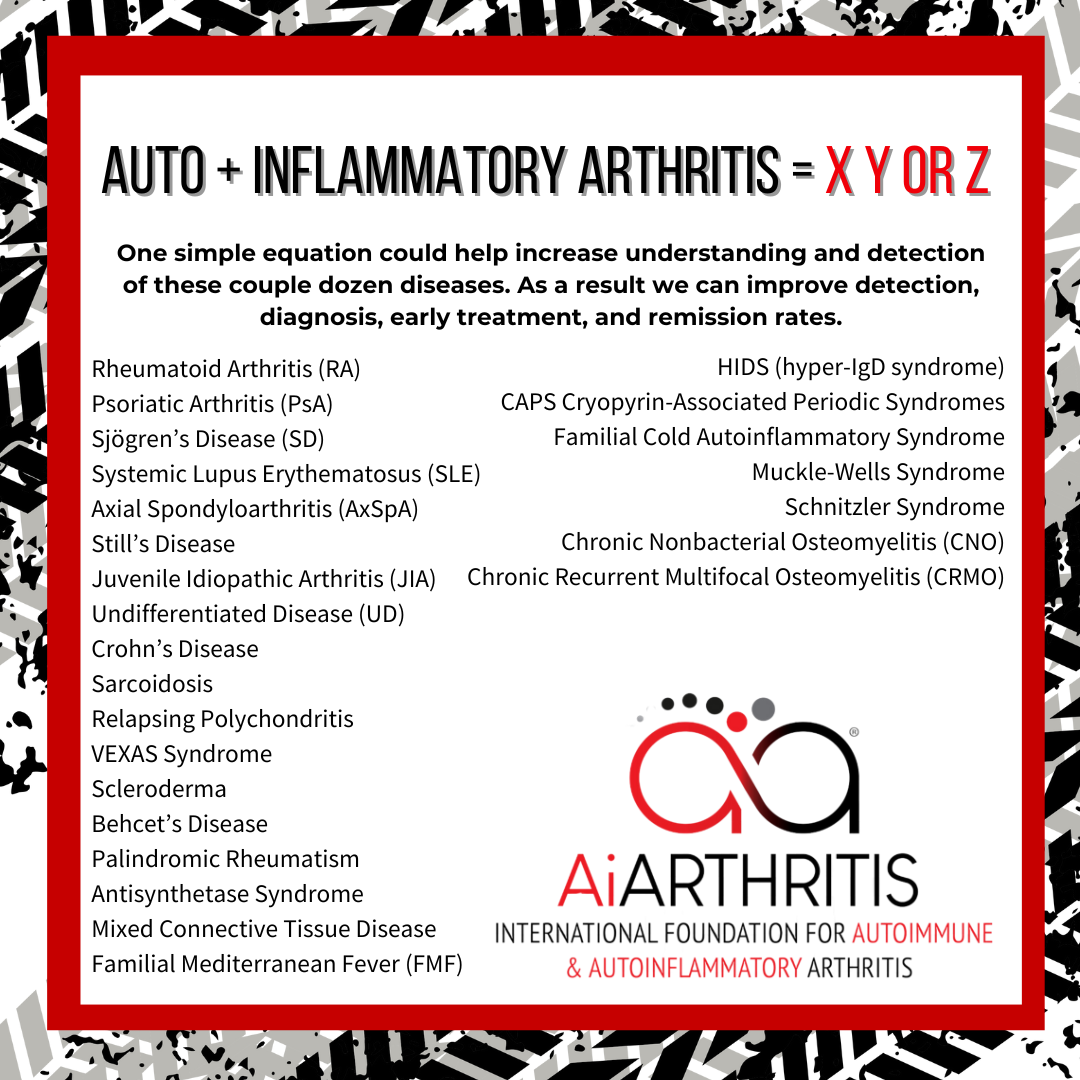
The Diseases
- X: Represents the diagnosis (one of the 22 AiArthritis diseases).
- Y IgG4 Related Disease (“IgG4-RD”), which is increasingly detected in patients with AiArthritis.
- Z: Fibromyalgia, often misdiagnosed or present as a comorbidity in a large population of people with AiArthritis diseases.
Fit the Equation?
The early detection awareness equation empowers healthcare practitioners and the public to identify these conditions promptly. If you are experiencing these symptoms, bring these up to your healthcare provider to investigate. It is important to advocate for ourselves while navigating life with AiArthritis.
Tips for seeking a diagnosis with AiArthritis diseases:
- Describe Your Symptoms: Explain any joint pain, stiffness, or swelling you’ve experienced. Mention if the symptoms are worse at certain times of day or after specific activities. Don’t leave out fatigue, cognitive dysfunction, malaise or fevers.
- Medical History: Share details about when the symptoms started, their progression, and any other relevant health conditions. Your doctor will ask questions to understand the context.
- Physical Examination: Your doctor will perform a physical exam, checking for swollen joints, tenderness, redness, and loss of motion. They’ll also assess your overall health.
- Laboratory Tests: Blood tests, such as the erythrocyte sedimentation rate (ESR) and C-reactive protein (CRP), can help evaluate inflammation levels. An antinuclear antibody test (ANA) may also be done to detect autoimmune markers.
- Imaging Tests: X-rays, MRI scans, and ultrasounds provide detailed images of joints, helping identify any damage or abnormalities.
- Be Open: Discuss your concerns openly with your doctor. Mention if you have a family history of autoimmune disorders or arthritis.