
What are AiArthritis Diseases?
Autoimmune & Autoinflammatory Arthritis Diseases
“AiArthritis” is a term for inflammation-driven arthritis caused by certain autoimmune and autoinflammatory diseases. In these conditions, the immune system misfires, mistakes healthy tissue for a threat, and triggers ongoing inflammation. This makes AiArthritis very different from common wear-and-tear arthritis (like osteoarthritis), which develops from joint use over time rather than immune dysfunction.
There are more than 100 recognized autoimmune and autoinflammatory (“Ai”) diseases, but only a few dozen commonly cause inflammatory arthritis. Because these conditions affect the immune system as a whole, inflammation can appear throughout the body — not just in the joints — impacting tissues, organs, and overall health.
Focusing specifically on the autoimmune diseases that include arthritis early in their course helps improve research, awareness, and patient care.
About 1 in 10 people worldwide live with at least one AiArthritis disease — including many “mystery patients” who have symptoms but no clear diagnosis yet. That’s roughly 450 million people. The odds are high that you or someone you know is dealing with these conditions or searching for answers.

Official graphic designed and trademarked (June 2019) by our organization to get people talking about A uto i mmune Arthritis and A uto i nflammatory Arthritis (AiArthritis) , which is the type of arthritis associated with having an autoimmune or autoinflammatory disease. It is also embedded in our logo!
Autoimmune vs. Autoinflammatory — What’s the Difference?
There are two parts of the immune system that play a big role in autoimmune and autoinflammatory diseases: the “adaptive” and the “innate” parts. As research into the immune system has advanced, some diseases once thought to be autoimmune (which stem from the adaptive part) are now categorized as autoinflammatory (which stem from the innate part). Some even fall somewhere in between the two, because at times these systems can cross communicate with each other.
Both types involve the immune system, but they behave differently.
Autoimmune Diseases
These conditions stem from the adaptive immune system, the part that learns and responds to things like infections, hormones, and environmental triggers. If someone is genetically susceptible, these triggers can cause the immune system to attack the body’s own tissues.
Autoimmune Arthritis Diseases:
Rheumatoid arthritis, psoriatic arthritis, lupus, axial spondyloarthritis, Sjogren’s disease, Undifferentiated Disease, Crohn’s Disease, Juvenile Idiopathic Arthritis (most subtypes except systemic JIA), Relapsing Polychondritis (RP), Mixed Connective Tissue Disease (MCTD), Antisynthetase Syndrome (ASS), Systemic Sclerosis (Scleroderma), Palindromic Rheumatism (PR)
Autoinflammatory Diseases
These come from the innate immune system, the body’s built-in first line of defense. Many are tied to genetic mutations that cause sudden or ongoing inflammatory episodes even when nothing specific has triggered them.
Autoinflammatory Arthritis Diseases: Adult-onset Still’s disease, Behcet’s Disease, systemic juvenile arthritis.CAPS (Cryopyrin-Associated Periodic Syndromes), VEXAS Syndrome, Schnitzler Syndrome, CNO/CRMO (Chronic Nonbacterial Osteomyelitis/Chronic Recurrent Multifocal Osteomyelitis), FMF (Familial Mediterranean Fever), HIDS (Hyper-IgD Syndrome / Mevalonate Kinase Deficiency)
*Regardless if the disease is autoimmune or autoinflammatory, symptoms and disease activity varies per person.
**Undifferentiated diagnoses occur when a person exhibits disease traits of one or more
AiArthritis diseases, but no one disease has fully developed enough to meeting diagnostic criteria for any one disease. Our conclusion is based on research conducted in 2013, the Early Symptoms of
AiArthritis study, which based our 50% theory on existing research.
Understanding the Immune Player Involvement in AiArthritis Diseases
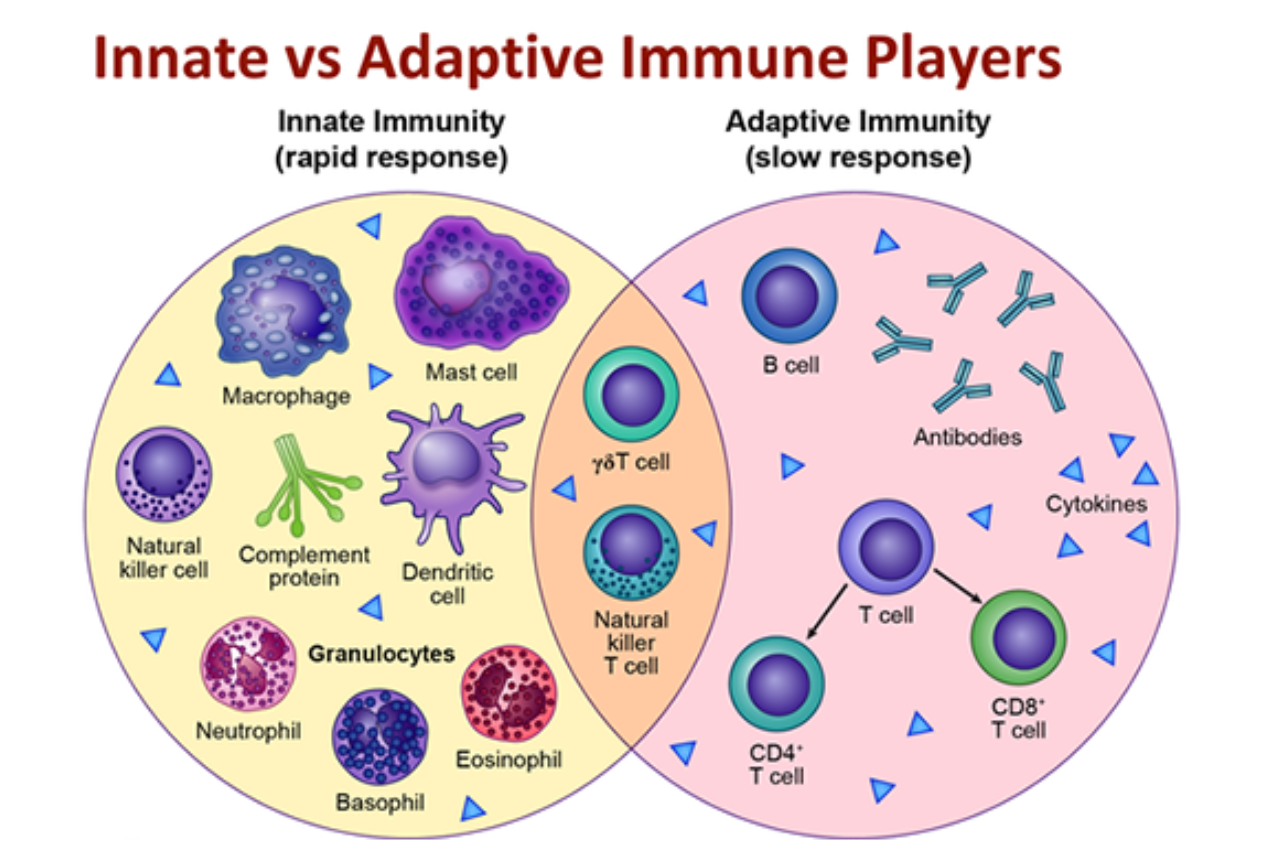
Autoimmune diseases start in the adaptive immune system, autoinflammatory diseases in the innate immune system. But as the responses overlap and trigger one another, it's becoming more common to combine these (which works under the term AiArthritis).
Innate (or born with/primitive) Immune System. When we are born, this part of our immune system is already working to fight off disease and infection. Autoinflammatory diseases stem from the innate immune system. They are characterized by episodes of apparently unprovoked inflammation (no specific environmental influence). Autoinflammatory diseases are often caused by mutations in proteins that have a major role in the innate immune system.
Adaptive Immune System. Adaptive (acquired or specific) immunity is triggered by a learned response. Autoimmune diseases are the result of a faulty acquired immune system. As a person's immune system encounters foreign substances (antigens), the components of acquired immunity learn the best way to attack each antigen and begin to develop a memory for that antigen. They involve some combination of genetic and environmental triggers. It is believed that the greater the genetic involvement, the earlier the disease will present; the later the onset, the higher likelihood there is a strong environmental trigger (gut or lung bacteria, smoking, etc.).
Disease List
There are over 100 autoimmune and autoinflammatory diseases ( Ai diseases) plus 100 conditions with arthritis. Only some have inflammatory arthritis as a major component.
AiArthritis vs OA
Need for Our Organization
In addition to expedited detection and diagnosis to improve quality of life, there is a need to differentiate arthritis types in order to combat confusion and misunderstandings.
References:
University of California - San Diego. "Autoinflammatory Disease Model Reveals Role For Innate, Not Adaptive, Immunity." ScienceDaily. ScienceDaily, 11 June 2009.
National Institute of Arthritis and Musculoskeletal and Skin Diseases (NIAMS). Autoimmune Diseases (Overview). https://www.niams.nih.gov/health-topics/autoimmune-diseases
National Institute of Arthritis and Musculoskeletal and Skin Diseases (NIAMS). Autoinflammatory Diseases (Overview). https://www.niams.nih.gov/health-topics/autoinflammatory-diseases