Franklin’s Journey with Rheumatoid Arthritis: Learning to Keep Moving Forward
For Franklin, the first signs of rheumatoid arthritis (RA) appeared quietly in 2012.
At the time, he was active and deeply involved in sports, playing ball games and participating in athletics. Like many people living with autoimmune and autoinflammatory arthritis diseases, Franklin initially brushed off the symptoms, hoping they would fade with time.
Instead, they grew worse. Over the next several years, he experienced increasing joint pain, swelling, stiffness, fever, and fatigue. Without a clear diagnosis, he kept pushing through the discomfort and trying to maintain his normal life.
“I kept hoping it would pass,” Franklin shared. “It did not.”
The Night Everything Changed
The turning point came on November 2, 2014. That night, Franklin experienced pain unlike anything he had ever felt before. The pain was relentless, lasting through the night and into the next day. It became so severe that his brother had to physically carry him to the hospital.
“Even after pain injections, the suffering continued,” he recalled.
For months afterward, Franklin continued to experience intermittent pain while searching for answers. Finally, he was diagnosed at the Rheumatology Clinic of Korle-Bu Teaching Hospital.
Receiving the diagnosis brought mixed emotions.
“There was relief because I finally had an explanation,” Franklin said. “But it also marked the beginning of a new reality I had to learn to live with.”
What People Don’t Always See
Like many people living with RA, Franklin often appears fine on the outside. People may see him smiling, standing, or moving through daily life, but what they cannot always see is what is happening beneath the surface.
“People do not always see the pain, discomfort, brain fog, depression, and fatigue that may be happening beneath the surface.”
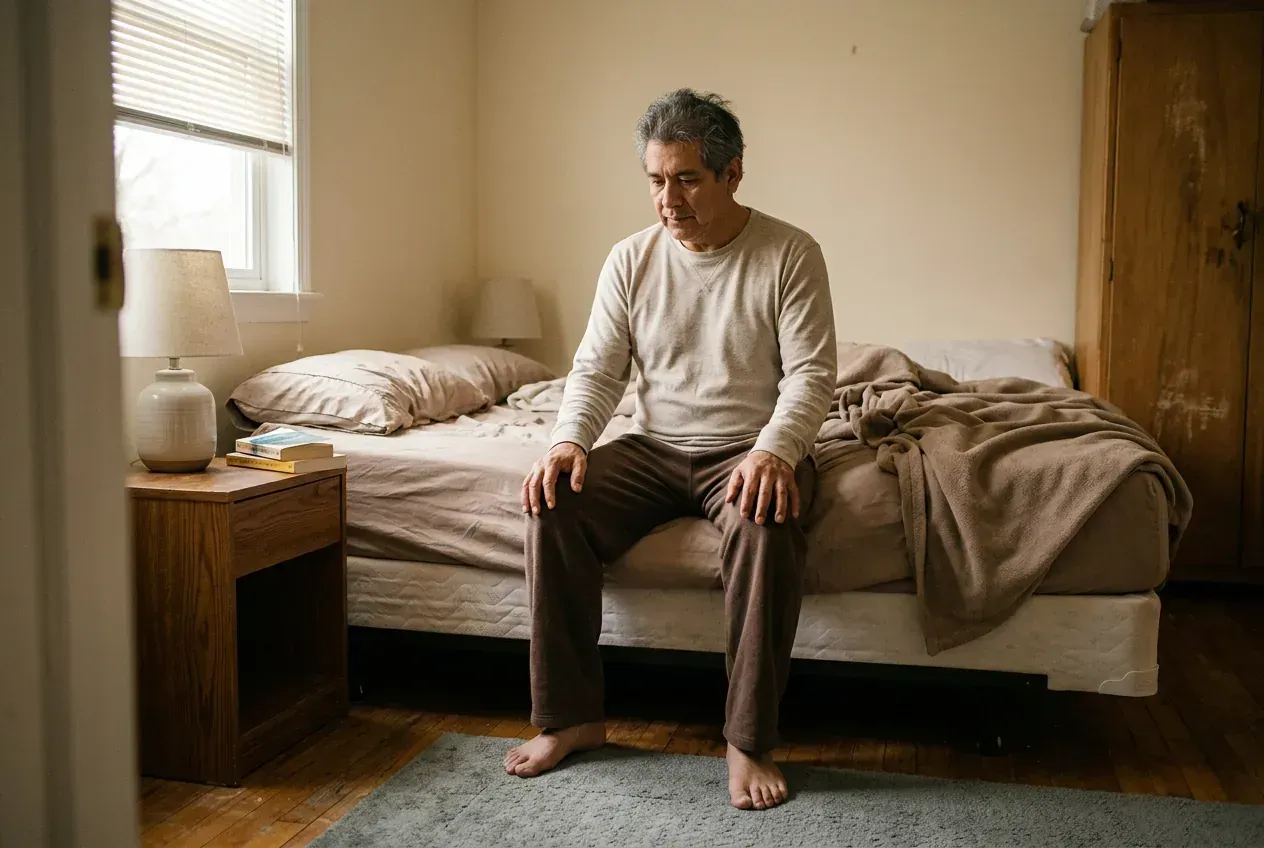
There are days when simply getting out of bed feels impossible. Franklin compares it to a car that refuses to start in the morning - everything is there, but the engine just will not turn over. Simple tasks that many people take for granted, like holding a spoon, brushing his teeth, or lifting a cup, have at times become difficult.
“The condition affects more than just my joints,” he explained. “It affects my energy, my movement, my confidence, and at times my ability to do the things I once loved most.”
This is one of the realities of autoimmune arthritis diseases that many people fail to understand: the illness is often invisible. And because it is invisible, it can be harder for others to grasp the full weight of what patients carry every day.
Learning a New Way to Live
Over time, Franklin has learned that living well with RA requires patience, discipline, and acceptance.
Managing his condition means staying consistent with medication, making necessary lifestyle changes, and learning to listen carefully to his body.He has also had to accept that some parts of his former life, especially intense physical activity and sports, are no longer possible in the same way.
“I can no longer live exactly the way I did before,” he said.
That adjustment has not always been easy, but Franklin has found strength through faith, family support, close friendships, and connection with others who understand life with chronic illness.
“Good medical care matters too,” he emphasized, “as does regular monitoring and the willingness to adapt when my body needs rest.”
For Franklin, managing RA is about more than medication alone.
“It is also about mindset, support, and learning to live wisely within new limits.”
A Different Road, Not the End of the Journey
When Franklin reflects on his experience, he compares it to a road trip. It has not been smooth. There have been painful detours, long stretches of uncertainty, and moments when he felt completely stopped in his tracks.
But there has also been growth.
And grace.
And resilience.
“If my journey were a road trip, I would want others to know that it has not been a smooth road, but it has not been a hopeless one either.”
That perspective is what Franklin hopes others living with AiArthritis diseases can hold onto.
An RA diagnosis does not mean life is over.
It does not mean purpose disappears.
It does not mean joy is no longer possible.
“It simply means the journey must be traveled differently.”
There may be slower days. More rest stops. More support needed along the way. But forward movement is still possible. Franklin’s story is a reminder that people living with chronic illness need understanding, compassion, and encouragement - not pity.
“With the right support,” he said, “we can continue to rise, rebuild, and live meaningfully, one day at a time.”
Help DRIVE awareness this World AUTOimmune & AUTOinflammatory Arthritis Day by joining the official social media campaign! Share your story, use ready-made graphics and captions, and help educate others about the real impact of AiArthritis diseases.
Every post helps make these often invisible diseases more visible. Learn how to participate and access the social media toolkit.