



Mixed Connective Tissue Disease (MCTD)
AiArthritis defines Mixed Connective Tissue Disease (MCTD) as:
MCTD is a rare autoimmune disorder where patients have features of more than one rheumatic disease, such as lupus, scleroderma, and polymyositis. It is identified by the presence of anti-U1-ribonucleoprotein (anti-RNP) antibodies in the blood.


Symptoms & Characteristics
Common in All AiArthritis Diseases
Flares: Periods of worsening symptoms are called flares. A flare can last for hours, days, weeks, or months.
Physical Activity: Condition improves with activity and exercise and worsens with rest.
Comorbidities: When inflammation is left uncontrolled due to lack of proper treatment, comorbidities can develop. 70% of patients with chronic, lifelong disease will develop comorbidities, including dual or triple diagnoses.
Family History:
Autoimmune diseases often run in families, indicating a potential genetic predisposition where that gene can cause disease. Autoinflammatory diseases can occur multiple times in a family, but is based off of genetic mutation. It is not a gene that causes the disease— but a mutation on the gene that can cause the disease which can then be passed on to the next generation.
"Auto" Symptoms
Fatiga: Fatiga o agotamiento severo que puede no aliviarse con cafeína o estimulantes y que puede presentarse incluso después de un largo período de descanso.
Disfunción cognitiva: Niebla mental o periodos de tiempo en los que el pensamiento se nubla y resulta difícil concentrarse.
Síntomas similares a los de la gripe: Sin tener gripe: náuseas, debilidad muscular y malestar general.
Fiebre: Por lo general, el grado es bajo en las enfermedades autoinmunes (con excepción de la artritis idiopática juvenil) y el grado es más alto en las autoinflamatorias (el porcentaje varía mucho según la enfermedad).
Referencia: Estudio sobre los primeros síntomas de la artritis inducida por adyuvante, AiArthritis, 2019.
Inflammatory Arthritis Symptoms
Stiffness: Severe stiffness in one or more joints, especially in the morning or after sitting for long periods of time.
Joint Pain: Episodes of joint pain that may last for hours, days, or even weeks, that can appear and disappear suddenly. Often described as “jumping pain” into different locations.
Typically the joint pain will coincide with one or more “Auto” symptoms and start and stop suddenly - for no apparent reason (which is called a "flare"). Some people will experience all of the above symptoms, others only a few.
If you have any of the arthritis features, and at least one of the “Auto” features, please consult your physician about a referral to a specialist.
Síntomas frecuentemente asociados con Enfermedad mixta del tejido conectivo
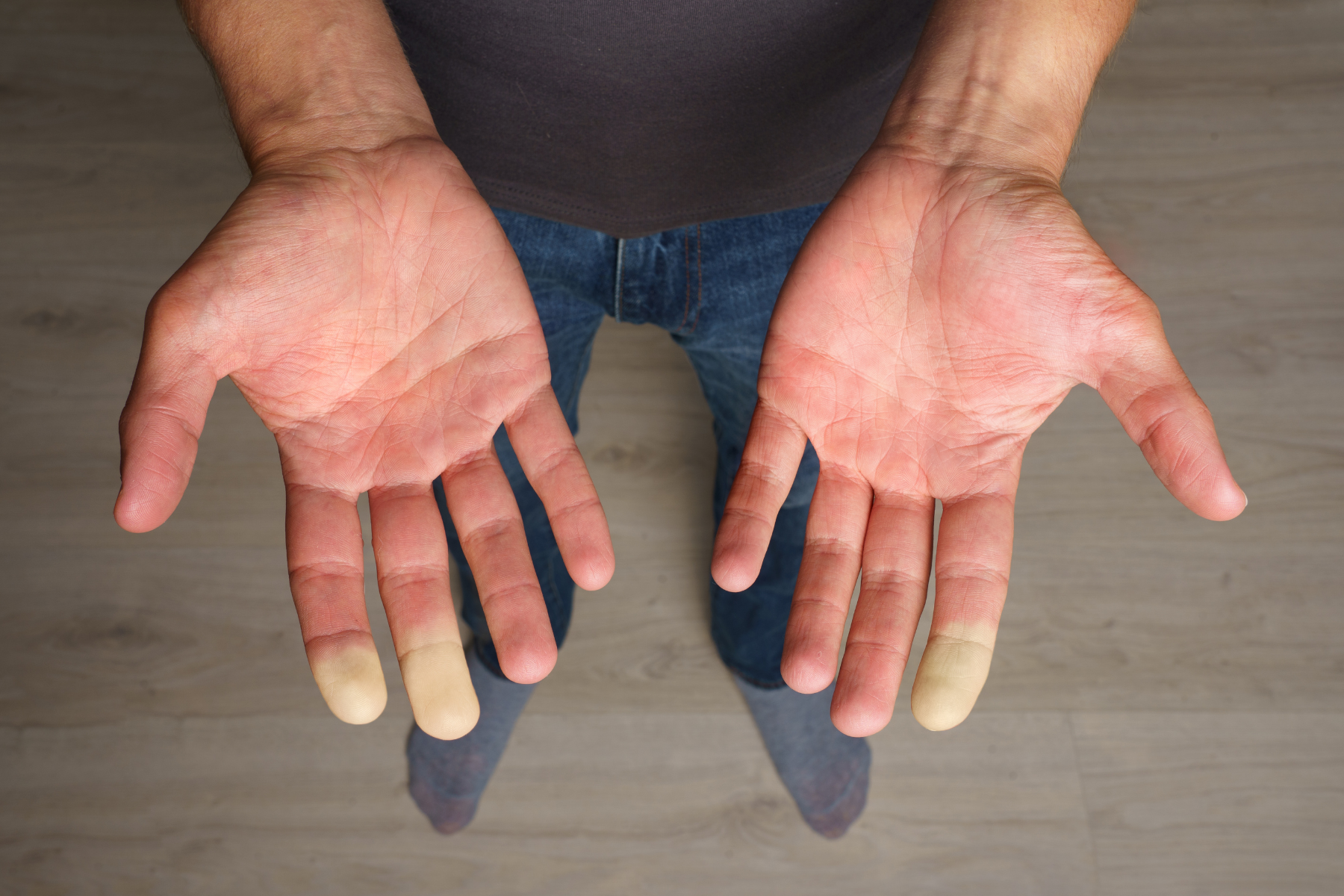
- Raynaud’s Phenomenon: Fingers and toes turn white or blue in response to cold or stress
- Difficulty swallowing
- Hair loss
- Lung involvement (shortness of breath)
- Lupus-like skin inflammation in areas exposed to the sun
- Associated with Lupus, Scleroderma and Sjögren’s disease
There’s no single test that can confirm a mixed connective tissue disease (MCTD) diagnosis, so rheumatologists rely on a combination of physical exams, blood tests, and family history of autoimmune diseases. Blood tests specifically focus on detecting anti-U1-ribonucleoprotein (anti-U1-RNP) antibodies, which is a hallmark finding in MCTD, as well as antinuclear antibodies (ANA), which are common in many autoimmune and autoinflammatory diseases. MCTD often presents with overlapping symptoms of lupus, systemic sclerosis, and polymyositis.
Los criterios diagnósticos de Alarcón-Segovia también pueden utilizarse para ayudar en el diagnóstico. Estos requieren un título elevado de anticuerpos anti-U1-RNP (superior a 1:1600) y la presencia de tres o más de las siguientes manifestaciones clínicas:
Raynaud phenomenon
Hand edema
Synovitis
Histologically proven myositis
Acrosclerosis
These criteria help to differentiate MCTD from other similar autoimmune conditions. While there are no specific ACR or EULAR guidelines exclusively for MCTD, these organizations emphasize the importance of identifying overlapping features with other connective tissue diseases to ensure accurate diagnosis and proper treatment.
- Envía TU consejo
¡Necesitamos TU consejo! Rellena este formulario para ofrecer consejos a quienes padecen tu misma enfermedad.
- La MCTD fue descrita por primera vez en 1972 por el Dr. Gordon Sharp, quien identificó un autoanticuerpo específico, el anti-U1 RNP, presente en pacientes con características superpuestas de lupus, esclerodermia y miositis. Su nombre refleja su naturaleza como una mezcla de múltiples enfermedades del tejido conectivo.
- It is very likely that MCTD develops into SLE (Lupus) or Scleroderma (Systemic Sclerosis)
- MCTD is often referred to as an "overlap syndrome"
- World Autoimmune and Autoinflammatory Arthritis Day - May 20th
- Rare Disease Day - February 29th (28th)
- Autoimmune Awareness Month - March
- Rheumatic Disease Awareness Month - September
- Pain Awareness Month - September
- Chronic Disease Awareness Day - July 10th
- Invisible Disabilities Week - 3rd full week of October
Con el fin de garantizar que esta página tenga la información más precisa y actualizada, esta página es... Actualmente a la espera de una evaluación médica. Parte de la información está sujeta a cambios.
Última actualización de la página: 31/10/2024